






Most commercial holiday installation work can be safely performed in Class 2 high visibility apparel. There are, however, specific scenarios where Class 2 is not sufficient and where regulatory and best practice guidance calls for the higher visibility coverage of a class 3 safety vest instead. Recognizing those scenarios in advance, and equipping crews accordingly, is the difference between a documented safety program and a reactive one. This guide walks through the technical distinctions, the operational conditions that demand Class 3, and the procurement considerations for facility managers and decorators building a defensible PPE program for the season.
What Distinguishes Class 3 from Lower Classes
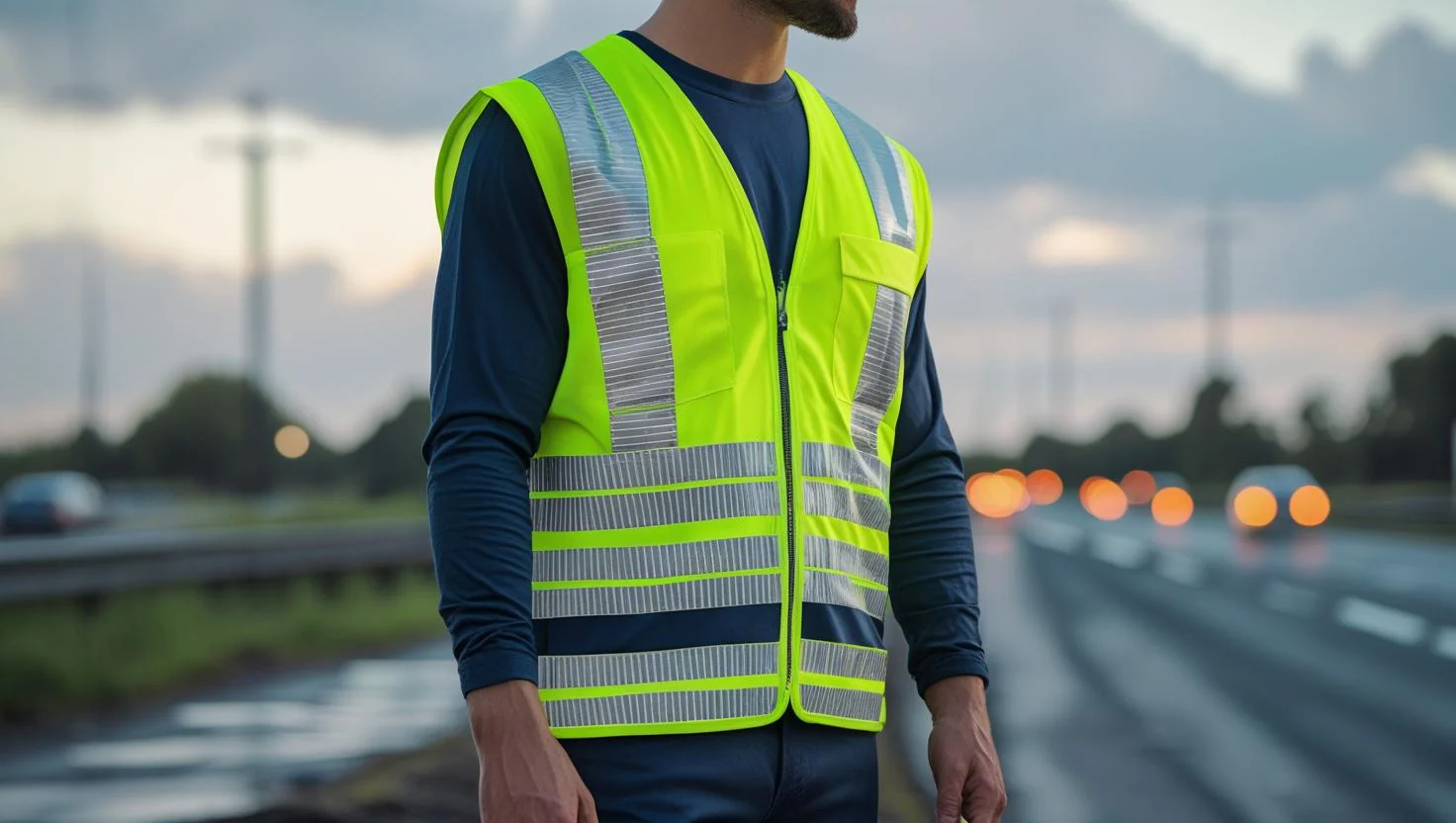
The American National Standards Institute, through ISEA 107, defines Class 3 as the highest visibility tier in standard high visibility apparel. Compared with Class 2, a Class 3 garment requires more background fluorescent material, more retroreflective striping, and coverage that extends to the arms in addition to the torso. This is why Class 3 typically appears as a sleeved garment, a vest with sleeves, or a vest worn with compliant high visibility long sleeves underneath.
The total surface area of background material is meaningfully higher: 1,240 square inches minimum versus 775 square inches for Class 2. The retroreflective striping requirement also increases. The combined effect is that a Class 3 ensemble is detectable from greater distances and across a wider range of angles than Class 2.
The Scenarios That Require Class 3
Several conditions common in commercial holiday installation call for Class 3 rather than Class 2.
Roadway and Highway Adjacent Work
Any work within the right of way of a roadway with posted speeds above 25 miles per hour triggers Class 3 requirements under most state and Federal Highway Administration guidelines. Highway billboard installations, overpass decorations, and any work where a struck by hazard from passing traffic is reasonably foreseeable fall into this category.
Night and Low Light Installations
Crews working between sunset and sunrise, or in conditions of fog, rain, or snow that reduce visibility, benefit from the additional retroreflective coverage of Class 3. The December installation calendar pushes much of the work into early evening and after dark, which makes this consideration broadly relevant rather than exceptional.
Complex Background Environments
A high visibility garment depends on contrast with its background. A worker on a snow covered rooftop, against a green tree backdrop, or in a parking lot full of orange traffic cones may be less visible in Class 2 than the standard testing assumes. Class 3 coverage provides margin against these realistic conditions.
High Speed Traffic Exposure
Construction, utility, and emergency response standards generally require Class 3 wherever traffic exceeds 25 miles per hour. Many commercial installations near service roads, drive throughs, and retail outparcels meet this threshold without the crew necessarily realizing it.
The Technical Specifications That Define Class 3
When evaluating Class 3 garments for procurement, verify the following:
- Background fabric area. Manufacturer labeling should confirm Class 3 compliance to ISEA 107 with documented background material square inches.
- Retroreflective striping. Stripes should be at least two inches wide, applied to the torso and the sleeves, and meet the photometric performance specified in the standard.
- 360 degree visibility. A compliant garment provides visibility from any approach angle, including from above for crews working below lift baskets or rooftop edges.
- Label and tracking. Compliant garments carry a label citing ANSI/ISEA 107 and the specific class. The label should also identify the manufacturer and a tracking code or lot number.
A garment missing any of these markers should be treated as non compliant regardless of how high visibility it appears.
Common Compliance Failures to Avoid
Three failure modes recur in field PPE inspections.
First, mixed class assemblies. A Class 2 vest worn over a non compliant long sleeve does not make a Class 3 ensemble. The sleeves themselves must meet the standard.
Second, faded or damaged garments. Retroreflective performance degrades with use, especially after repeated industrial laundering. Garments should be retired when striping shows visible wear or fading.
Third, oversized or undersized fit. A vest that does not fit properly fails to provide the coverage the standard assumes. Stock multiple sizes and replace garments that no longer fit the assigned worker.
Specifying Class 3 for Mixed Use Crews
For crews that move between low risk staging areas and high risk installation sites within a single shift, the practical approach is to default to Class 3 and accept the slight cost premium. Crews are far less likely to comply with a class change protocol mid shift than to simply wear Class 3 throughout.
Building a Multi Class Inventory
Most professional installation programs maintain both Class 2 and Class 3 inventory, allocated to roles by exposure profile. Drivers and indoor staging workers may wear Class 2. Outdoor installation crews and any worker in a roadway adjacent role wear Class 3. Document the allocation logic in writing as part of the program, so that supervisors can confirm compliance at a glance.
Closing the Loop on Visibility
The cost difference between Class 2 and Class 3 is small. The legal and operational difference, in the wrong scenario, can be substantial. Build the program around the highest exposure conditions the crew will face, document the allocation logic, and inspect garments regularly through the season.
For decorators, facility managers, and venue operators outfitting holiday installation teams, National Safety Gear maintains ANSI compliant Class 2 and Class 3 inventory in the sizes and quantities seasonal hiring surges require. Equip the crew for the highest risk task in their shift, not the lowest, and the program will hold up to scrutiny every time.