





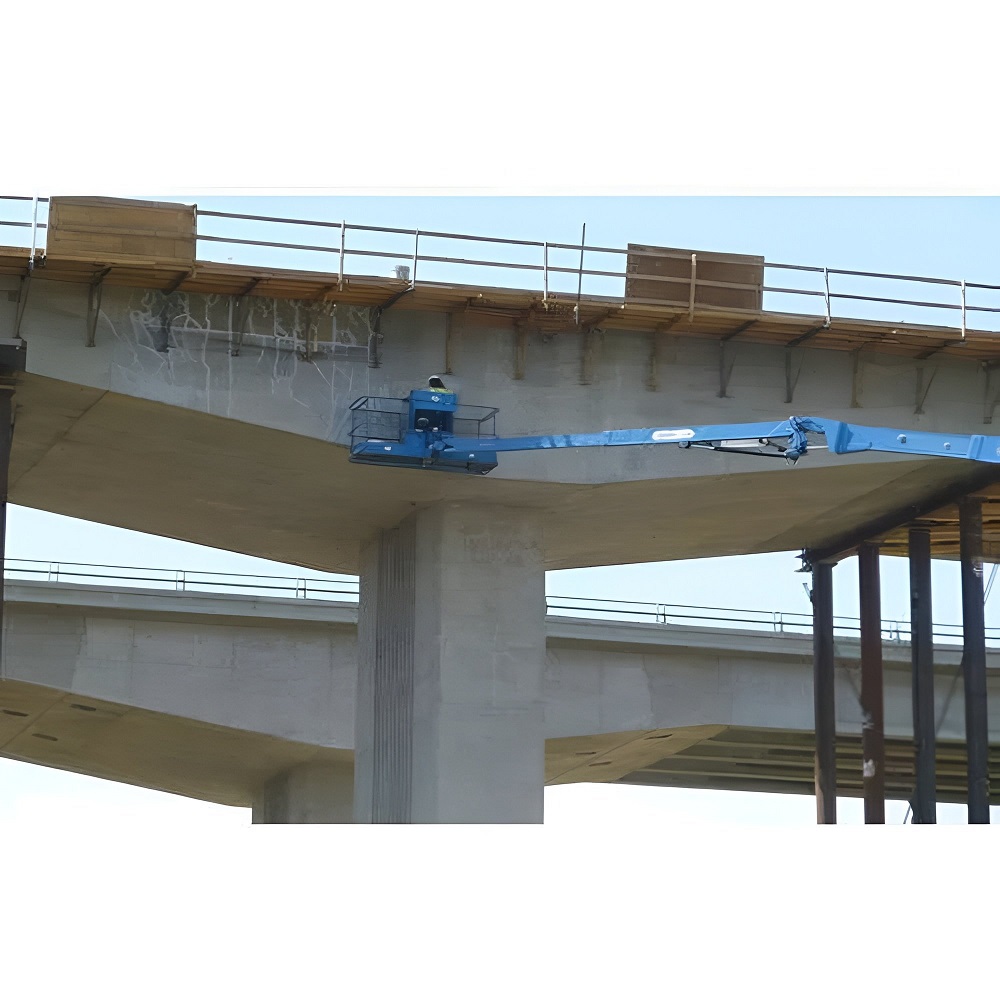
When a bridge starts showing its age, the question facing most municipalities is rarely whether something needs to be done. It is what. Choosing between bridge rehabilitation and full replacement is one of the most consequential infrastructure decisions a local government can make, and the wrong call can cost a community hundreds of thousands of dollars, or leave travelers dealing with detours for years longer than necessary.
The decision is rarely straightforward. Two bridges can look equally worn from the outside and still call for completely different approaches. One might need a new deck and guardrails, while the other has structural problems running down to its foundation. Understanding how engineers and public works officials actually work through this choice is useful for anyone involved in local government, construction, or community planning.
It Starts With the Inspection Data
Every decision about a bridge’s future begins with its condition rating. In the United States, bridges on public roads are inspected at least once every two years, and each major component, the deck, the superstructure, and the substructure, receives a rating on a scale from 0 to 9. A brand new bridge rates a 9. A bridge rated 4 or below is considered structurally deficient or in poor condition, which triggers a closer look and, in serious cases, weight restrictions or closure.
Those numbers matter because they tell engineers where the problems actually live. A bridge with a failing deck but sound substructure is a strong candidate for rehabilitation. The bones are good. The surface is not. A bridge with deteriorated piers, scouring around the foundations, or corrosion in the primary load carrying members is a different story, and replacement starts to look more realistic.
This is why two neighboring counties can make opposite decisions about bridges that look similar to the average driver. The visible rust and cracked concrete only tell part of the story. The inspection reports tell the rest.
The Case for Rehabilitation
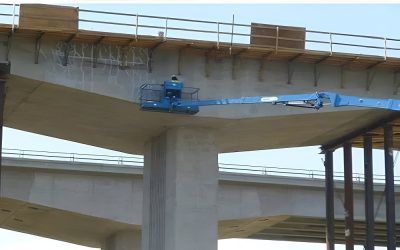
Rehabilitation means restoring a bridge to a serviceable condition without tearing it down. Depending on the structure, that might involve replacing the deck, patching or overlaying concrete, repairing steel members, installing new joints, updating drainage systems, or strengthening the girders to carry modern load limits.
The biggest argument for rehabilitation is cost. A deck replacement or a major repair program often runs a fraction of what a full replacement costs, sometimes 30 to 50 percent of the price of new construction. For a small township operating on a tight budget, that difference is the whole conversation.
Rehabilitation also tends to be faster. Replacing a deck can often be done in a single construction season, sometimes with staged construction that keeps one lane open. Full replacement usually means a complete closure or an expensive temporary bridge, and the timeline stretches out over multiple seasons.
There are other benefits that do not show up on a spreadsheet. Historic bridges, for example, often cannot be replaced without losing federal or state preservation considerations, and many communities feel a genuine attachment to structures that have defined their landscape for generations. Rehabilitation preserves that character. It also avoids the environmental permitting that comes with new construction in and around waterways, which can add months or years to a replacement project before anyone even breaks ground.
The Case for Full Replacement
Rehabilitation is not always the bargain it appears to be. Engineers look at something called the remaining service life of the structure. If a bridge has already been rehabilitated twice, and the substructure is rated poor, spending money on a third deck replacement may only buy another 15 years. Replacement buys 75 to 100.
This is where lifecycle cost analysis comes in. Instead of comparing the upfront price tags, engineers compare the total cost of ownership over several decades, including maintenance, future repairs, traffic disruption, and eventually demolition. Run those numbers on a badly deteriorated bridge, and replacement often wins even though the initial sticker price is higher.
Replacement also solves problems rehabilitation cannot touch. Older bridges were often built for vehicles that no longer exist. A replacement can widen lanes, raise clearances for modern freight traffic, add proper shoulders, improve sightlines, and bring the structure up to current design standards for earthquakes and flooding. If the road approaching the bridge is scheduled for realignment, or if traffic volumes have outgrown the old width, replacement is usually the only option that makes long term sense.
Safety plays a role too. A structure with deep structural deficiencies can sometimes be kept standing with repairs, but the risk profile is different, and the liability questions for a municipality are real.
The Questions Municipalities Actually Ask
When engineers present findings to a city council or township board, the conversation usually comes down to a handful of practical questions.
How bad is it, really? The honest answer depends on where the deterioration sits. Surface problems are fixable. Structural problems are a different conversation.
What can we afford right now, and what funding is available? This is often the deciding factor. State and federal programs, including bridge investment programs aimed at structures in poor condition, frequently favor one approach over the other, and the availability of grant money can tip the scales. Many communities pursue rehabilitation as a stopgap while applying for replacement funding, which is a legitimate and common strategy.
How long will each option last? A repair that buys 20 years is a reasonable investment for a bridge that will be replaced when a larger road project comes through. It is a poor investment for a structure that will need the same work again in a decade.
What happens to traffic during construction? For a rural bridge with a convenient detour, a closure is an inconvenience. For a bridge that carries school buses and emergency vehicles with no realistic alternate route, the construction timeline matters as much as the cost.
What do the utilities and the waterway require? Bridges often carry water mains and utility lines, and work in regulated waterways involves permitting that varies widely depending on the scope of the project.
A Decision, Not a Formula
There is no universal rule that says a bridge rated 4 gets replaced and a bridge rated 5 gets repaired. The rating is a starting point, not a verdict. Engineers weigh the location of the deterioration, the load path, the traffic needs, the funding landscape, the environmental context, and the community’s long term plans before recommending a path forward.
The best outcomes usually come from communities that start the conversation early, well before a bridge reaches a crisis point. A municipality that commissions a thorough condition assessment and a lifecycle cost comparison has time to pursue funding, coordinate with other road projects, and schedule work on its own terms. A municipality that waits for a failed inspection is forced to choose quickly, with fewer options and less leverage.
For local leaders, the takeaway is simple. When a bridge in your community starts showing its age, the right question is not “fix or replace.” The right question is “what does the data say, and what does the long term math look like?” Get those answers from qualified civil engineers early, and the decision tends to make itself.