

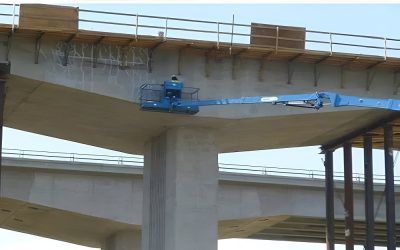








Civil construction projects which fall under the civil engineering faculty revolves around the design, planning, coordination, construction, and post construction maintenance of all infrastructure of a region. This includes among others roads, railways, bridges, tunnels, airports, dams, harbours and other small or large-scale public works which without are essential towards a functional, active and healthy society.
Civil construction projects are mostly flanked by infrastructure that are essential for economic development and more often than not these projects involve weighty financial investments and as well as technical expertise. The correlation between civil construction projects, economic development and the wellbeing of the general population is interlinked in many ways and in this brief, we will examine the role of civil construction projects towards the general population of a geographic region.
Starting with land transport systems such as railroads, roads and highways, pavements and drainage all the way to public hospitals, police stations and public buildings just to name a few comes under the scope of civil construction. Even though most construction activities are subbed to a private civil construction company competent with the ‘civil component’ of construction, the planning, coordination and monitoring of the project still falls under the supervision of government agencies.
For instance, when governments decide on building bridges or tunnels to facilitate transportation over obstacles ranging from rivers to valleys, the planning, designing and tendering process to third parties only takes place after approval is obtained from the civil construction component within the government that consists of engineers, architects and building experts. Those associated with civil construction projects still play an integral part in maintaining structures long after the completion of projects.
A good example within this context is construction of dams and reservoirs that holds water for the region’s population to manage irrigation or even power generation. After a dam or reservoir has been built, the management of these facilities still falls under a government linked or managed agency such as the water or electric board which have their own group of engineers. The same concept applies to railways, harbours and even airports.
Other responsibilities that fall under the hood of civil construction or civil engineering includes structural engineering which revolves around ensuring that building are safe by monitoring the stability and load-bearing capacity of completed structures over time. Geotechnical Engineering is another component of civil construction or civil engineering that involves analysis of soil and rock which are critical towards ensuring safe and stable surfaces for construction.
Environmental considerations, project management, sustainability factors and even carbon footprint elements have been placed under the purview of the civil engineering spectrum. Without the branch of civil engineering, populations will be hindered from engaging in economic activities effectively as the means to do so would not be available.
Progress for a given region will only be possible provided the necessary infrastructure is available, and as we already know, all infrastructure projects are civil construction projects. In summary, the civil construction branch may be deemed as an enabler for populations in a wide variety of ways.